
It is the question we hear most at our studio on Magadi Road: “Should I get PPF or ceramic coating?” Both are called “paint protection”, both make a car look glossy, and both are sold as long-term investments. But they work in completely different ways, and the right answer depends on how and where you drive.
What ceramic coating actually does
A ceramic coating is a liquid SiO2 layer that bonds chemically to your clear coat and hardens into a thin, glass-like shell. It gives a deep gloss, makes water bead and slide off, and stops bird droppings, tree sap, hard-water spots and UV from attacking the paint as quickly. Washing becomes much easier because dirt does not stick.
What it does not do is stop physical damage. The layer is measured in microns, so a stone flicked up by a truck, a key scratch or a careless parking-lot door will still mark the paint.
What PPF actually does
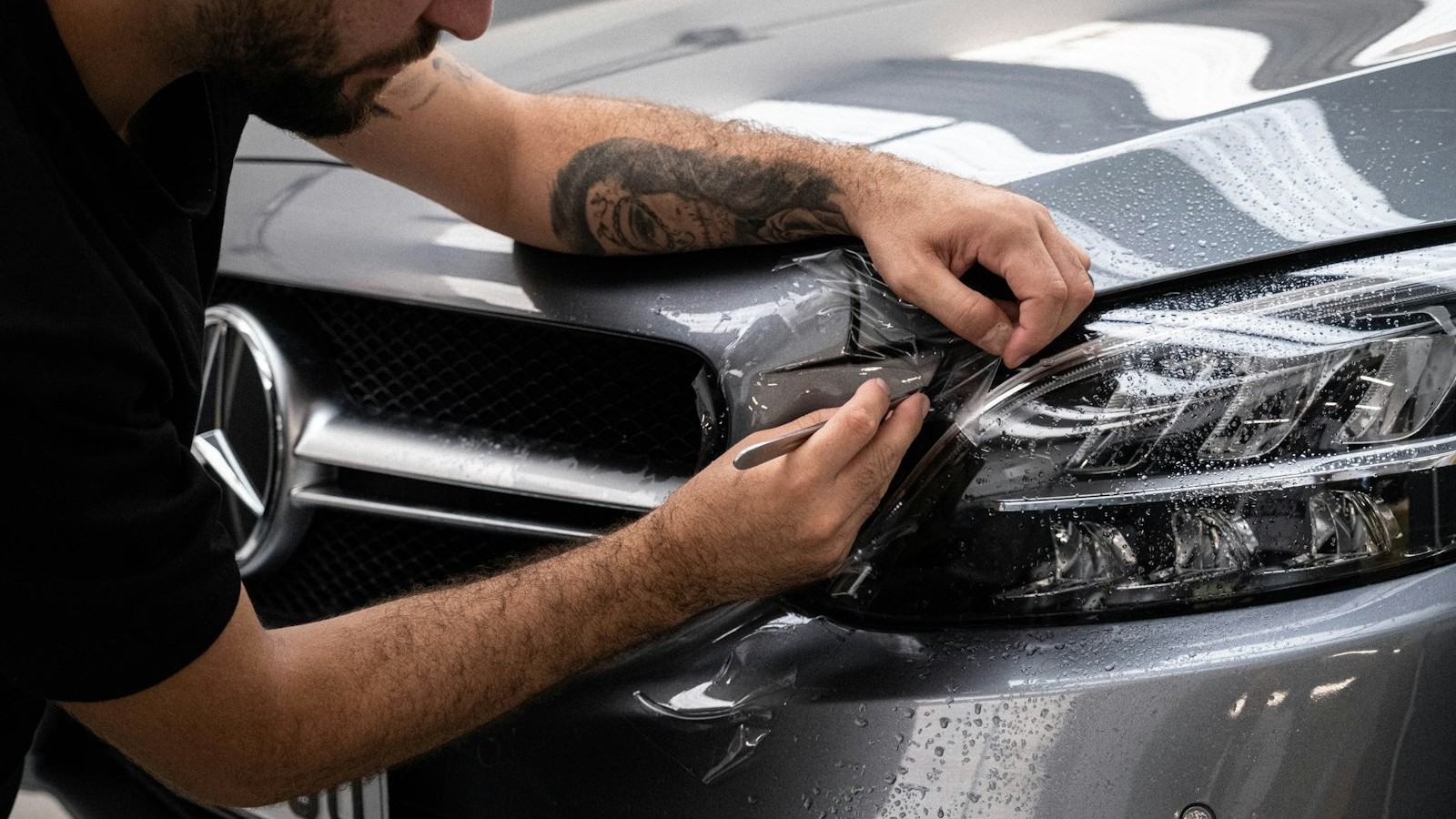
Paint Protection Film (PPF) is a thick, transparent thermoplastic polyurethane (TPU) film applied panel by panel. It physically absorbs stone chips, gravel rash and light scratches, and good-quality films self-heal minor swirl marks with heat from the sun or warm water. It is the only option that genuinely protects paint from impact.
Side-by-side comparison
| Ceramic coating | PPF | |
|---|---|---|
| Stone chips & scratches | Limited | Excellent, self-healing |
| Gloss & water beading | Excellent | Good (excellent with a coating on top) |
| UV & chemical stains | Very good | Very good |
| Typical lifespan | 1–5 years by package | 5–10 years by film grade |
| Can change the look? | No | Yes — matte, satin or colour PPF |
| Investment | Lower | Higher |
Which one suits Bangalore roads?
Bangalore driving means constant construction dust, loose gravel near metro and road works, and heavy traffic on stretches like Magadi Road, Mysore Road and the Outer Ring Road. If you drive daily or often take the highway towards Kunigal, Mysuru or Tumakuru, stone chips on the bonnet and bumper are almost guaranteed. That is where PPF earns its cost.
- New or premium car, daily highway use: PPF — full body if the budget allows, otherwise full front (bonnet, bumper, fenders, mirrors).
- City car, mostly parked outdoors: ceramic or graphene coating for UV, bird droppings and easy washing.
- Want the best of both: PPF on high-impact areas plus a coating over the film and the remaining paint.
The combination most owners choose
A coating applied over PPF is now the most popular setup at our studio. The film handles impact; the coating adds slickness, extra gloss and water beading so the film stays cleaner and is easier to wash. It is also the best way to keep a matte or satin PPF looking even.
Our honest advice
Do not let anyone sell you a coating as “scratch-proof” — it is not. And do not over-spend on full-body PPF for a car that rarely leaves the city. Bring your car to our studio off Magadi Road and we will inspect the paint and suggest what it actually needs.
Frequently asked questions
Is ceramic coating enough without PPF?
For city driving it often is — coating protects against UV, bird droppings and water spots and keeps the car easy to clean. If you drive on highways or want protection from stone chips, add PPF on the front at least.
Can ceramic coating be applied over PPF?
Yes. A coating over PPF adds gloss and water beading and keeps the film cleaner. It is the most popular combination at our Magadi Road studio.
Book at our Magadi Road studio
Detailed Premium Studio, No 103, Machohalli, off Magadi Road, Bengaluru 560091. Call +91 80952 41221 / +91 96119 60984, WhatsApp us, or try finishes first in our 3D PPF simulator.